


Special Education Teacher Frames Self-Care as an Ethical Mandate for Professional Longevity
- Robert Moore
- Oct 19, 2025
- 3 min read
Updated: Oct 19, 2025

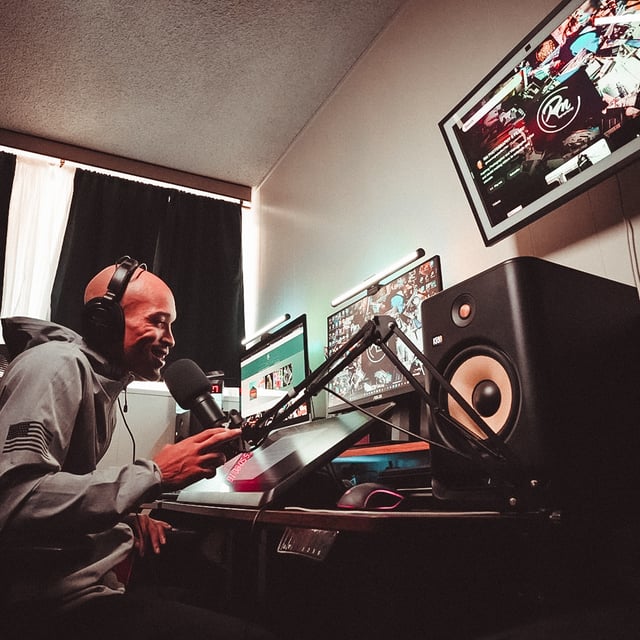
Special education professional Regina Smith, whose career background includes behavioral specialist roles in both home-based therapy and hospital inpatient treatment, recently detailed her philosophy on effective teaching and self-care during an interview on The Shot List podcast hosted by Robert Moore, owner of RM PHOTOGRAPHY & FILM. Regina asserts that successful instruction for students with special needs is rooted in a functional learning framework and a firm commitment to teacher well-being. This interview provides essential context for educators grappling with high-stress demands and curriculum challenges.
Regina’s teaching philosophy, which she summarizes as, "All students are capable of learning, it’s my job as a teacher to figure out how they learn best and meet them where they are at," is key to sustaining her career in a high-stress field. She identifies the single most emotionally demanding part of her work as the pressure of affecting students' lives: "These are kids' lives, and I have a big impact on their growth and development. I can either help them grow or fail them and be ineffective." This high-stakes environment transforms self-care from a personal choice into a professional necessity. Regina frames self-care as an ethical requirement for high-quality teaching, citing the risk of student emotional dysregulation. She explains that because students with significant disabilities often "feel our feelings and feed off our behaviors and emotions," a teacher who is not regulating risks is inevitably creating a negative emotional environment. Practices such as grounding through meditation and committing to "leaving work at work" are thus vital components of her professional duty, helping to combat widespread teacher burnout and attrition in special education.
This requirement for maintaining her emotional well-being allows Regina to effectively shift her teaching approach from focusing on student deficits to recognizing their unique differences. Regina advocates for a functional curriculum approach, advising new teachers to focus on skills students need to live as independently as possible, such as navigating a grocery store, rather than prioritizing abstract concepts like traditional pencil and paper academics. Regina notes that non-verbal students, for example, demonstrate knowledge through showing picture choices or selecting tangible objects, rather than complex open-ended questions. This hands-on, practical approach to learning, consistent with functional curriculum principles, directly contrasts with standardized testing pressures, which are often based on abstract, inaccessible materials. Regina illustrates this adaptation through a student who struggled with general writing prompts but produced seven sentences in five minutes when the assignment focused on describing his favorite video game, demonstrating the power of personal relevance.
Furthermore, Regina emphasizes the critical importance of dignity and communication in the classroom. She maintains a firm policy regarding the confidentiality of students, asserting that teachers should not engage in "gossip" or discuss a student's challenges in front of their peers. This is essential for building Strong Relationships Between Teachers & Students throughout the school year. Regina stresses that this dignity is owed to all students, including those who are non-verbal, stating that the assumption that they cannot understand or internalize such conversations is incorrect and threatens the trusting environment she works to establish.
The insights provided by Regina Smith underscore the need for systemic support for special education professionals. Her approach highlights that the combination of strong personal regulation, a commitment to functional, hands-on learning, and maintaining student dignity are interdependent factors that determine teaching effectiveness. For the full context of Regina Smith’s personal journey and detailed advice on managing the emotional complexities of special education, readers are encouraged to access the complete audio interview on The Shot List podcast posted above.


Comments