


HOW LOCAL FILMMAKERS IN HAWAII ARE NAVIGATING A 80% INDUSTRY DECLINE

The Vanishing Act
In the world of cinema, Hawaii has long been the "Gold Coast" for Hollywood blockbusters. From the lush valleys of Kauai to the rugged coastlines of Oahu, the islands have served as a versatile backdrop for everything from Jurassic Park to Lost. However, a jarring reality has set in over the last several years. Since 2019, the traditional film industry on the islands has contracted by a staggering 80 percent. While the headlines often focus on the loss of big-budget tax credits, the departure of mainland studio labor, and the rising cost of living that pushes professionals to Georgia or California, a quieter, more resilient story is unfolding on the island of Oahu. This isn't just about the absence of trailers; it’s about the presence of a new kind of creative economy.

While the headlines often focus on the loss of big-budget tax credits, the departure of mainland studio labor, and the rising cost of living that pushes professionals to Georgia or California, a quieter, more resilient story is unfolding on the island of Oahu. This isn't just about the absence of trailers; it’s about the presence of a new kind of creative economy. While the departure of major studio productions suggests a terminal decline for Hawaii’s cinematic future, a closer look at the local level reveals a paradigm shift.
This isn’t just a story of economic loss, but one of cultural reclamation. By adopting community-based "Minga" philosophies—defined by shared resources and the rejection of commercial gear obsession—Honolulu’s independent filmmakers are bypassing traditional skill ceilings to protect their own narratives. Through the writing and lens of the investigative project STAINED, we see how a tight-knit network of creators is turning a fiscal crisis into a blueprint for a self-sustaining, indigenous-focused film industry.
On the set of the independent film STAINED, the "currency" of production has shifted from capital to community. There are no massive equipment trucks parked on the curb, nor is there a line item in the budget for high-end daily rentals from a mainland house. Instead, there is a "shared locker" mentality that fights back against the gear obsession that often paralyzes independent creators.
In Hawaii, where shipping costs for equipment can double a budget, the "Minga" philosophy, a South American concept of communal work for the common good is a survival necessity. Sebastian Williams, the project’s Social Media Manager and Content Producer, explains that the physical tools of the trade are secondary to the strength of the professional network.
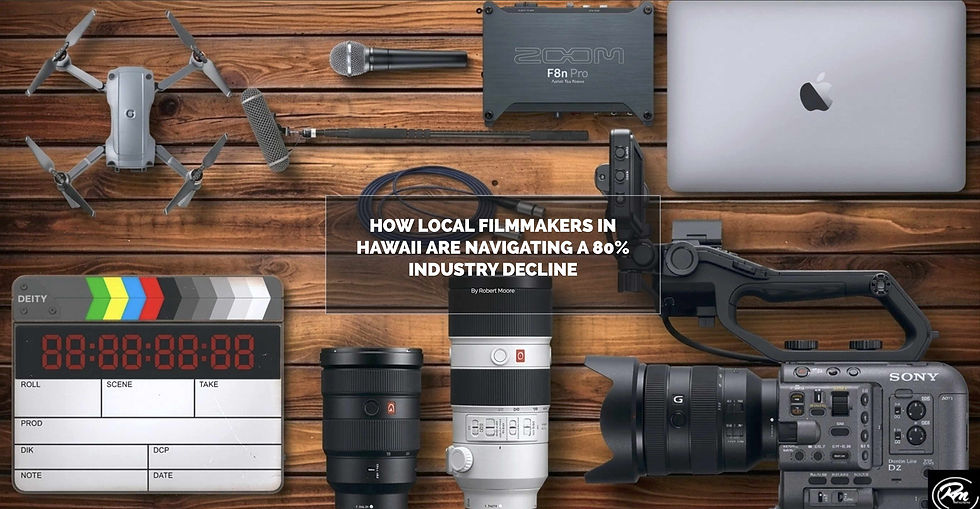
"A lot of the camera equipment is our DP Grant’s," Williams notes, highlighting how personal ownership serves the collective. "A super fun example is our high-tech Deity slate, which isactually being lent to us by a friend of the director. It’s nice to have friends and peers who want to help these things happen because they believe in the story, not just the paycheck." This model removes the gatekeeping often associated with high-end production, allowing quality work to be produced even when the traditional funding dries up.

Breaking the Skill Ceiling
The belief that you cannot tell a meaningful story without a six-figure equipment package and a 50-person crew is a skill ceiling that this community is actively shattering. This psychological barrier often prevents talented locals from ever picking up a camera. Kimiko Dugan, the project’s 1st Assistant Director, argues that the heartbeat of a film isn't found in its pixel count or its sensor size, but in the integrity of the relationships on set.

"Filmmaking comes from the heart. It comes from good relationships, integrity, and storytelling. If you absolutely can't get that camera... just shoot it on your phone. Something is better than nothing. You see so many people waiting for 'the right time' or 'the right gear,' but you only fail when you give up." — Kimiko Dugan, 1st AD


This sentiment is echoed by Kylie Maxwell, the Gaffer on set, who spent hours wrestling with lighting setups to achieve a "studio look" with a fraction of a studio's resources. Maxwell notes that the lack of institutional support has actually fueled a new, raw creative drive. "No one is waiting for the perfect opportunity anymore," Maxwell says. "What gives me hope for the future is the upcoming filmmakers' hunger for creating. They are just going out and making films because they have to, not because they were invited to."
Protecting the Home Narrative
Perhaps the most vital aspect of this movement is the reclamation of local identity. For decades, Hawaii has been used as a generic backdrop for stories told by outsiders—often reducing the islands to a postcard or a punchline. Austin Direcio, a Sound Engineer on the project, argues that a local set carries a different psychological weight that mainland productions simply cannot replicate, regardless of their budget.
"Something about our mind changes when we're at home," Direcio explains, emphasizing that sound design and cinematography are different when the creator has a personal connection to the land. He points to the nuances in the script by writer Tiffany Liu. "The writer wrote the film STAINED with her home in mind... Everyone works to create a feeling of home, which for a lot of us is here in Hawaii."
For Direcio and his peers, the work is about more than just entertainment—it is a form of cultural defense. As the industry shrinks, the stories that remain must be authentic. "We need to protect our culture and our ideas," he says. "A lot of our stories take place on the inside, within our home, and those are the stories that aren't usually commercialized or seen by the outside world."

The Real-World Versus the Classroom
As traditional entry-level film jobs (like Production Assistant roles on union sets) wane, the "rungs" of the industry ladder have disappeared. In response, independent sets have become the new vocational training ground. Henry Jackson, the film’s Editor, credits this "extremely tight- knit community" for providing a sense of belonging and technical growth that bypasses the traditional gear obsession.
"The Hawaii film industry may wane and come back, but it isn't going anywhere," Jackson says confidently. He notes that seeing the same faces across different sets—sharing tips on the Sony FX3 or discussing color grading in DaVinci Resolve—creates a technical bridge for students. These "pop-up" sets act as an informal university, where the curriculum is dictated by the immediate needs of the production rather than an abstract syllabus. This hands-on experience allows local creators to hit the ground running, even as the formal industry infrastructure remains in flux.

The New Frontier
The contraction of the Hawaii film industry is a crisis, but it is also a catalyst. By trading equipment, time, and talent, the creators behind projects like STAINED are building a self- sustaining a future that doesn't rely on a green light from a Los Angeles boardroom. They are proving that you don't need "studio permission" to capture the soul of the islands. As the industry continues to evolve, the advice from the front lines of Honolulu remains clear.
In the words of Kylie Maxwell: "Find collaborators who are passionate and take the initiative. Being flexible and thinking creatively is the biggest skill set for creating films despite circumstances." This Honolulu filmmaking community isn't just surviving—it’s reinventing what it means to be a filmmaker in the Pacific, one shared slate and one local story at a time.
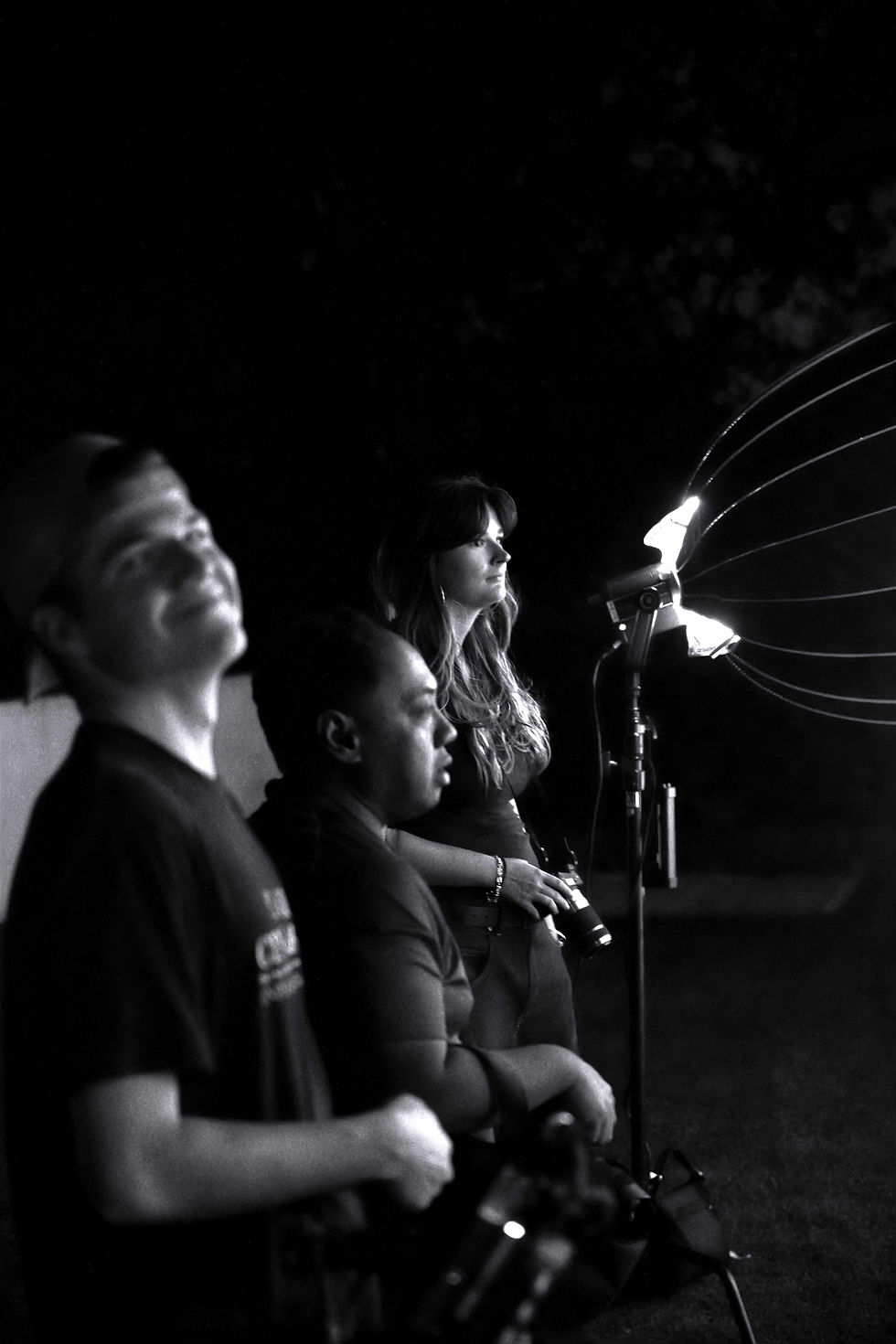
Beyond the statistics of industry decline are the creators choosing to stay. This gallery highlights the collaborative grit on the set of STAINED, where community-based storytelling replaces traditional studio infrastructure. All original photography, investigative reporting, and multimedia content were produced and captured by Robert Moore for RM PHOTOGRAPHY & FILM in Honolulu, Hawaii.
Reference
Arenillas, M. G. (2025). North-South filmmaking, settler colonialism, and indigenous resurgences. (https://www.google.com/search?q=https://research.ebsco.com/linkprocessor/plink%3Fid%3Dcd41221d-84e2-32c0-89b5-7f7352f524b0) JCMS: Journal of Cinema and Media Studies, 65(2), 150–156.
Givanni, J., Asante, J., & Hoyes, M. (2025). Black film bulletin: Shoot the people. (https://www.google.com/search?q=https://research.ebsco.com/linkprocessor/plink%3Fid%3Db31ed113-59ed-3b49-a5bc-8f65c9878935) Sight & Sound, 35(9), 25–32.
Honolulu Civil Beat & KHON2. (2025). Hawaii film industry shrunk 80% since pandemic; hope on the horizon. (https://www.khon2.com/local-news/hawaii-film-industry-shrunk-80-since-pandemic-hope-on-the-horizon/)KHON2 News.
O’Rawe, C., & Russell, C. (2026). Forum on non-professional actors in independent cinema. (https://www.google.com/search?q=https://research.ebsco.com/linkprocessor/plink%3Fid%3Dbe49ddc3-e7e4-314e-a128-6f4576c8225d) Journal of Film and Video, 78(1).
Schroeder Rodríguez, P. A. (2025). Community-based cinema in Abiayala and the classroom. (https://www.google.com/search?q=https://research.ebsco.com/linkprocessor/plink%3Fid%3Dc0401cbe-c356-3ab6-ba03-004d10c295d9) JCMS: Journal of Cinema and Media Studies, 65(2), 143–149.
About the Author
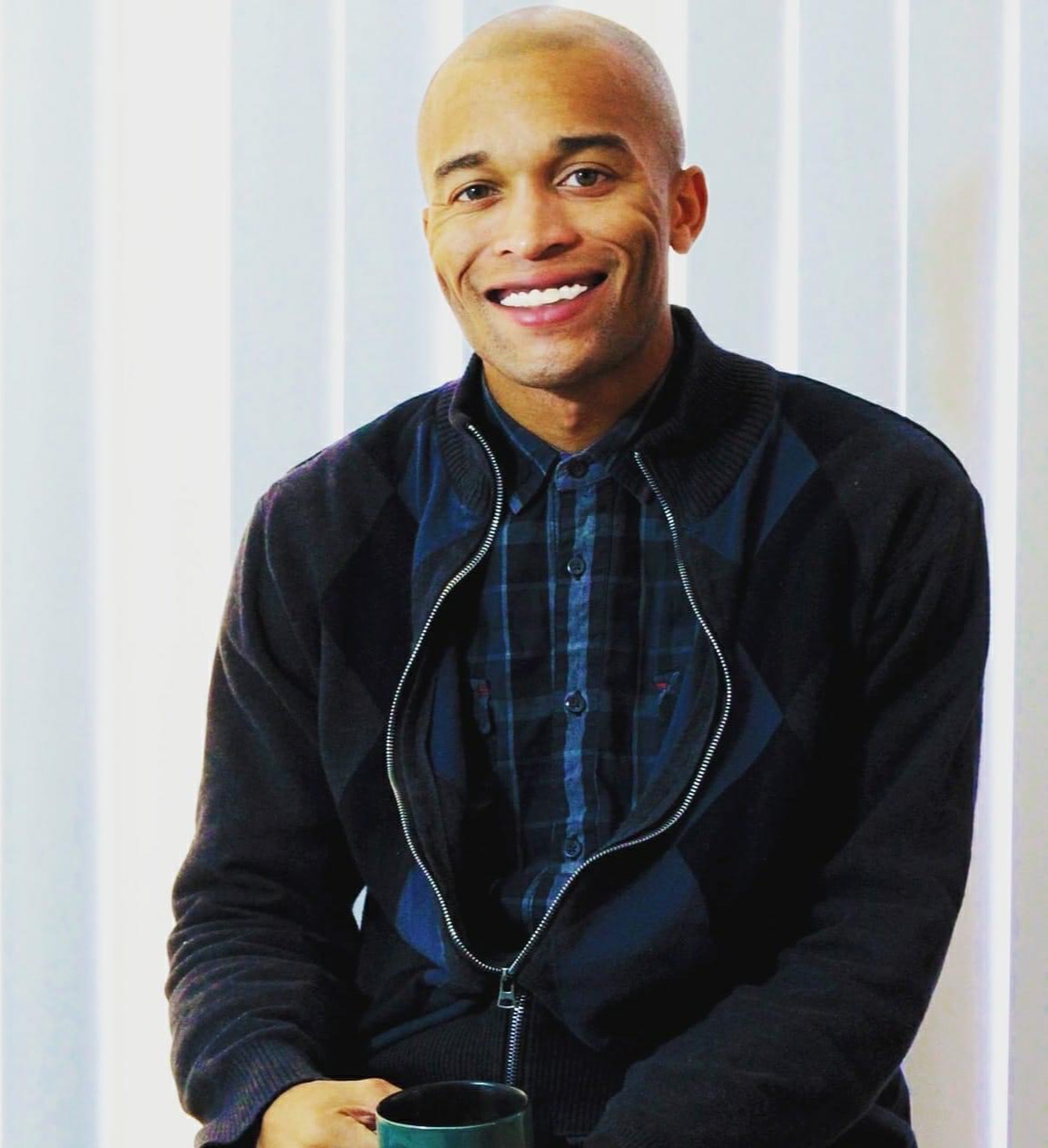
Robert Moore is a Honolulu-based cinematographer, journalist, and owner of RM PHOTOGRAPHY & FILM. A U.S. Marine Corps veteran with a background as a squadron photographer for attack helicopters and a special billet in combat camera, Robert holds a B.S. in Digital Cinematography from Full Sail University and is currently pursuing a Master’s in New Media Journalism. His work focuses on the intersection of technology, nature, and Hawaiian culture, aiming to document the islands while shedding light on the stories of his local community with the integrity and eye of an authentic documentarian.

![Fujifilm. (2026, Jan. 13). instax mini Evo Cinema special site. [Screenshot]. Retrieved from https://instax.com/mini_evo_cinema/en/](https://static.wixstatic.com/media/98fa79_deaa722a2e624919b1274e43b54c8f2a~mv2.webp/v1/fill/w_550,h_842,al_c,q_85,enc_avif,quality_auto/98fa79_deaa722a2e624919b1274e43b54c8f2a~mv2.webp)
Comments